
Why Finish Carpentry Defines Your Home Interior in 2026
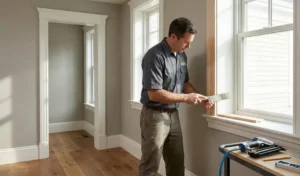
When you walk into a beautifully renovated home, you might not immediately notice the door casing or the window trim, but your brain registers the quality. It is the subtle language of finish carpentry that whispers luxury and structural integrity. Most homeowners focus on paint colors or flooring, yet it is the architectural millwork that ties every design element together.
As we move through 2026, the trend in home remodeling has shifted toward intentionality and craftsmanship. People are no longer satisfied with cookie-cutter builds, they want homes that feel bespoke. This starts with the casing, which is the decorative molding surrounding door and window openings, designed to hide the gap between the drywall and the frame.
Choosing the right molding profile is a decision that impacts the visual weight of a room. If the trim is too thin, the room feels unfinished, if it is too bulky without purpose, it feels cramped. Professional finish carpenters understand how to balance these proportions to enhance the aesthetic value of your property.
For those planning a renovation, understanding these missed details is the difference between a standard project and a masterpiece. LG Construction & Remodeling specializes in these intricate touches, ensuring that your interior trim work is executed with precision. Whether you are looking for local expertise in Massachusetts or New Hampshire, the focus remains on the details others overlook.
The Functional Purpose of Door Casing and Window Trim
While we often view window casings as purely decorative, they serve a vital structural and protective function. In any building, there is a rough opening for windows and doors that is slightly larger than the unit itself. This gap allows for settling and insulation, but it leaves an unsightly and drafty space that must be sealed.
Finish carpentry provides the bridge between the functional structure and the finished wall. The trim acts as a seal, preventing air leaks and protecting the edges of the drywall from moisture and physical impact. Without high-quality casing, your walls are vulnerable to chipping and wear in high-traffic areas.
In the climate of New England, wood expansion and contraction are significant factors. Expert carpentry contractors select materials like MDF, pine, or hardwood based on the specific environment of the room. This technical selection ensures that your door frames remain beautiful and functional through the seasons of 2026 and beyond.
Properly installed window trim also provides a foundation for window treatments. If the window stool or apron is installed incorrectly, your blinds and curtains will never hang straight. This is why the finish carpentry stage is considered the fine art of the construction process, requiring a level of patience that general construction often lacks.
Essential Components of Window Trim Systems
Understanding the anatomy of a window is the first step toward a successful renovation. Many homeowners are surprised to learn that a window consists of several distinct pieces of woodwork that must be perfectly mitered and joined.
| Component | Description | Primary Function |
| Head Casing | The horizontal piece at the top. | Sets the visual height and style. |
| Side Casing | Vertical pieces on either side. | Frames the opening and protects edges. |
| Window Stool | The “sill” or shelf at the bottom. | Provides a horizontal ledge for the sash. |
| Apron | The trim piece below the stool. | Covers the gap and provides a finished look. |
| Plinth Block | Decorative block at the base. | Transition point between casing and baseboard. |
Common Mistakes Homeowners Make When Choosing Casing
One of the most frequent errors in home renovation is failing to maintain consistency in trim profiles. It is tempting to choose a modern, flat casing for the kitchen and a traditional crown molding for the dining room, but this creates visual friction. In 2026, the most successful designs utilize a cohesive trim package throughout the house.
Another missed detail is the miter joint quality. Inexpensive or rushed labor often results in gaps at the corners of door casings. These gaps might be hidden with caulk initially, but as the house settles, the caulk cracks and reveals poor craftsmanship. A master finish carpenter uses techniques like bisquiting or specialized wood glues to ensure joints remain tight forever.
Scale is the third major pitfall. If you have ten-foot ceilings, a standard 2.5-inch casing will look like an afterthought. You need a more substantial architectural molding to match the volume of the space. Conversely, in a smaller cottage-style home, overly ornate door trim can overwhelm the architecture and make the rooms feel smaller than they are.
Finally, homeowners often overlook the reveal. The reveal is the small portion of the door or window frame that remains visible between the casing and the opening. A consistent 1/8-inch or 3/16-inch reveal is the hallmark of professional finish carpentry. Inconsistent reveals are a dead giveaway of a DIY or amateur installation.
Exploring Different Styles of Architectural Molding
The style of your door casing tells a story about your home’s era and your personal taste. In 2026, we see a resurgence in Craftsman style trim, characterized by clean, straight lines and a lack of ornate curves. This style emphasizes the beauty of the wood and the precision of the joinery, making it a favorite for modern farmhouse designs.
On the other hand, Colonial casing remains a timeless staple in New England homes. This profile features a series of ridges and valleys that catch the light, adding depth to the doorway. It works exceptionally well in historic restorations where maintaining the original character is paramount.
For those seeking a minimalist look, Eased Edge casing or Modern Flat trim provides a sleek transition. This style is often paired with hidden baseboards for a seamless floor-to-wall transition. However, even the simplest styles require an expert hand to ensure the lines are perfectly level and plumb, as there is no ornate detail to hide imperfections.
Comparison of Popular Trim Styles
Craftsman: Simple, rectangular profiles with a heavy header. Focuses on sturdy, honest construction.
Victorian: Highly ornate, often using multiple layers of molding to create a deep, dramatic effect.
Provincial: A softer approach with rounded edges and gentle curves, often found in traditional suburban homes.
Minimalist: Flat boards with sharp, square edges, perfect for contemporary 2026 architecture.
Material Selection: MDF vs. Solid Wood in 2026
The debate between MDF (Medium Density Fiberboard) and solid wood for door casing is more relevant than ever. In 2026, high-moisture resistant MDF has become a standard for painted trim. It is perfectly smooth, lacks knots, and does not warp or shrink as much as natural timber. For a crisp, white painted finish, MDF is often the superior choice for interior trim.
However, if you desire a stained finish, solid wood is the only option. Woods like Oak, Maple, and Walnut offer grain patterns that provide warmth and organic beauty. Stained window trim creates a frame for the outdoors, acting as a piece of art in its own right. The choice of wood species should align with your flooring and cabinetry to create a unified interior palette.
Finger-jointed pine is another popular middle ground. It offers the strength of real wood but is more affordable because it is made from smaller pieces of pine joined together. This material is excellent for painted casing, but the joints can sometimes ghost through the paint over time if not primed correctly. A professional finish carpentry service will always use high-quality primers to prevent this.
How Finish Carpentry Impacts Home Value
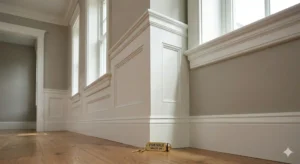
Investing in high-end finish carpentry is one of the most reliable ways to increase a home’s resale value in 2026. Buyers today are savvy, they look past the staging and look at the bones. When they see custom door casings, multi-piece crown molding, and perfectly executed window stools, they perceive the home as being high-quality and well-maintained.
Trim work is considered a permanent furniture item. Unlike a sofa or a rug, the casing stays with the house and defines its character for decades. By upgrading your millwork, you are essentially giving your home a structural facelift. This is especially true in luxury markets where buyers expect a certain level of architectural detail.
Beyond aesthetics, quality carpentry suggests that the homeowner did not cut corners. If the trim is perfect, the buyer assumes the electrical, plumbing, and insulation behind the walls are also up to par. It is a psychological cue of total home health that can lead to higher offers and faster sales in the competitive 2026 real estate market.
The Installation Process: What to Expect from Professionals
The journey to perfect door casing begins with an accurate site assessment. A carpentry contractor will measure every opening, checking for walls that are out of plumb or floors that are not level. In older homes, walls are rarely perfect, requiring the carpenter to back-bevel or scribe the molding so it sits flush against the surface.
Installation involves specialized tools that most DIY enthusiasts don’t have, such as pneumatic 18-gauge brad nailers, compound miter saws, and high-precision levels. The process of finish carpentry is quiet and meticulous. Each piece of woodwork is cut with a 1/16th-inch margin of error, ensuring that the joints are hairline tight.
After the wood is nailed in place, the finishing stage begins. This involves filling nail holes with wood putty, sanding the joints smooth, and applying caulk where the casing meets the wall. This preparation is 70% of the work. Without proper prep, even the most expensive mahogany trim will look mediocre once the paint or stain is applied.
5W2H Framework for Your Trim Project
Who: You should hire licensed finish carpenters with a portfolio of completed millwork projects.
What: A complete overhaul of door casings, window trim, and baseboards to create a unified look.
Where: Every room in the house, prioritizing common areas like living rooms and entryways for maximum impact.
When: Ideally after the walls are painted with a base coat but before the final coat and floor finishing.
Why: To improve home insulation, protect drywall, and significantly elevate the interior design.
How: By selecting a molding profile, choosing a material (MDF or Wood), and scheduling a professional installation.
How Much Time: A standard home takes 3 to 7 days for a complete trim upgrade, depending on the complexity of the profiles.
Custom vs. Stock Moldings: Which is Right for You?
Stock moldings are what you find at big-box home improvement stores. They are convenient and cost-effective, but they offer limited variety. In 2026, many homeowners are opting for custom millwork to create a unique identity. Custom door casing allows you to choose the exact width, depth, and profile shape to match your home’s unique architecture.
Custom options are particularly useful for historic homes where original molding is no longer manufactured. An expert finish carpenter can take a sample of your original Victorian trim and have it replicated at a local mill. This preserves the historical integrity of your home while allowing for modern updates.
For a mid-range project, you can build up stock moldings. This involves combining two or three different pieces of trim to create a large, elaborate casing or crown molding. This gives you a custom, high-end look without the price tag of a fully custom-milled profile. It is a favorite technique for homeowners looking to add character to suburban properties.
Advanced Techniques in Window Trim: The Stool and Apron
The bottom of a window is often the most neglected area. Many builders simply wrap the window with casing on all four sides. This is known as a picture frame install. While acceptable for modern styles, it often feels thin in traditional homes. A more sophisticated approach is the use of a window stool and apron.
The stool is the horizontal piece that extends into the room (the windowsill), while the apron is the decorative piece of trim installed directly beneath it. This assembly provides a sturdy base and adds a significant amount of visual weight to the window, making it look larger and more expensive.
In 2026, we are seeing window stools made from durable materials like Quartz or Solid Surface integrated with traditional wood casing. This is excellent for windows that might get wet from rain or house plants, as it prevents the wood from rotting. The transition between the stone stool and the wood casing requires an expert finish carpenter to ensure a water-tight and aesthetically pleasing fit.
Why Professional Craftsmanship Matters in 2026
To wrap up, finish carpentry is not just an added expense—it is a strategic investment in your property’s soul. In a competitive market, these architectural details serve three primary functions:
Visual Framework: It provides the clean lines and shadow depths that make interior paint and furniture truly “pop.”
Structural Protection: Beyond aesthetics, baseboards and casings protect your drywall from the daily wear and tear of vacuum cleaners and foot traffic.
Increased Resale Value: Homes with high-quality crown molding and custom millwork consistently command higher appraisals in the Massachusetts real estate market.
Ready to elevate your home’s interior with expert finish carpentry? Contact us today to schedule your professional consultation and let us bring the precision your project deserves, or call us directly at: (978) 906-9676
Expert Finish Carpentry and Trim Services Near You
Choosing the right carpentry team means working with professionals who understand the regional architecture of New England and how local humidity levels affect wood expansion. At LG Construction & Remodeling, we specialize in delivering seamless joints and custom millwork that stand the test of time, regardless of the season.
If you are located in one of the areas below, explore our dedicated service pages to learn more about how our team can help with your interior trim and woodworking needs:
- Finish Carpentry in Salem, NH
- Finish Carpentry in Nashua, NH
- Finish Carpentry in Manchester, NH
- Finish Carpentry in Medford, MA
- Finish Carpentry in Melrose, MA
- Finish Carpentry in Hopkinton, NH
- Finish Carpentry in Weare, NH
- Finish Carpentry in Bow, NH
- Finish Carpentry in Watertown, MA
- Finish Carpentry in Pembroke, NH
- Finish Carpentry in Canterbury, NH
- Finish Carpentry in Hooksett, NH
- Finish Carpentry in Derry, NH
- Finish Carpentry in Amherst, NH
- Finish Carpentry in Arlington, MA
- Finish Carpentry in Bedford, NH
- Finish Carpentry in Belmont, MA
- Finish Carpentry in Boston, MA
- Finish Carpentry in Brookline, MA
- Finish Carpentry in Cambridge, MA
- Finish Carpentry in Fitchburg, MA
- Finish Carpentry in Hollis, NH
- Finish Carpentry in Hudson, MA
- Finish Carpentry in Leominster, MA
- Finish Carpentry in Lexington, MA
- Finish Carpentry in Londonderry, NH
- Finish Carpentry in Malden, MA
- Finish Carpentry in Marlborough, MA
- Finish Carpentry in Merrimack, NH
- Finish Carpentry in Newton, MA
- Finish Carpentry in Pelham, NH
- Finish Carpentry in Shrewsbury, MA
- Finish Carpentry in Somerville, MA
- Finish Carpentry in Waltham, MA
- Finish Carpentry in Windham, NH
- Finish Carpentry in Worcester, MA